FemiCore is marketed as a natural, stimulant free formula, and the brand does not list specific side effects. That is common for supplements, but it does not mean nothing to consider.
This page covers what the ingredients are known for, who should take extra care, and which interactions are worth checking with a doctor. For what the product is and how it works, see our FemiCore overview.
Based on 19,263+ reviews!
See user experiences in FemiCore Reviews
FemiCore contains nine ingredients, split between botanical extracts and probiotic strains.
The four botanicals are Mimosa Pudica, Bearberry, Cranberry Extract and Granular Berberine. Cranberry is the most recognised name in urinary wellness, largely for its proanthocyanidin content. Bearberry, also called uva ursi, has a long history of traditional use in the same area. Berberine is a plant compound studied mostly for metabolic effects. Mimosa Pudica is associated with binding and clearing compounds through the digestive tract.
The five probiotics are all Lactobacillus strains: Crispatus, Acidophilus, Plantarum, Gasseri and Casei. Crispatus in particular is one of the dominant strains found naturally in the female urogenital tract.
The formula is described as a proprietary blend, which means individual doses are not disclosed on the label. You get the ingredient list but not the amounts.
It is stimulant free and non GMO, taken as one capsule daily.
The maker does not list side effects for FemiCore, and describes the formula as natural and stimulant free. That is standard positioning for supplements, but it is not the same as saying nothing can happen.
Based on what the individual ingredients are known for, a few things are worth being aware of.
Probiotics commonly cause mild digestive adjustment in the first week or two. Bloating, gas, changes in bowel habits. This usually settles as the body adapts.
Berberine can cause stomach upset, cramping or constipation in some people, particularly at higher doses.
Bearberry is not recommended for long term continuous use. Traditional guidance limits it to short periods.
Cranberry is generally well tolerated, though large amounts can cause stomach discomfort.
Individual doses are not disclosed, so predicting how noticeable any of this might be is guesswork.
Stop taking it and speak to a doctor if anything unusual develops.
Anyone on prescription medication. This is the main group. Berberine interacts with blood sugar and blood pressure medications. Cranberry may interact with warfarin and other blood thinners. Both are documented interactions worth checking against your specific prescriptions.
Pregnant or nursing women. Not intended for either. This applies to most supplements and is stated in the product's own disclaimers.
Anyone with kidney or liver conditions. Bearberry in particular is not recommended for people with kidney problems, and berberine is processed through the liver.
People with new or worsening symptoms. Sudden changes in bladder function can indicate infection or other conditions that need diagnosis, not nutritional support. See a doctor first.
Anyone with diabetes. Berberine affects blood sugar. If you monitor levels or take medication for it, this needs a conversation with your doctor before starting.
People with digestive sensitivity. Probiotic strains can trigger bloating and cramping in some.
Anyone under 18. The product is formulated for adult women.

WARNING: Stock levels of FemiCore™ are limited Accept your reserved package above NOW before your discount expires.
Daily use is what the product is designed for. One capsule per day, and the maker recommends staying with it for three to five months.
For most healthy adults with no medication conflicts, daily use of these ingredient types is generally well tolerated. Discussion around FemiCore side effects tends to focus on the first couple of weeks rather than long term use, since probiotic adjustment settles as the body adapts.
The one point worth flagging is bearberry. Traditional guidance for uva ursi limits continuous use to short periods, typically a week or two at a time, rather than months on end. That guidance relates to concentrated preparations, and the amount in a proprietary blend is likely much lower. Still, since the dose is not disclosed, there is no way to check where FemiCore sits.
Raising this with a doctor is reasonable if you plan to take it for several months.
The product is manufactured in a GMP certified facility, which speaks to production standards rather than ingredient safety for any individual.
If anything feels off, stop and get advice. The 60 day guarantee applies to orders placed through the official website, so stopping early does not mean losing your money.
Take one capsule daily with water. That is the full instruction, and there is no benefit to doubling up.
A few practical points beyond the dose.
Start when you can pay attention. The first week or two is when probiotic adjustment tends to show, so beginning during a busy or stressful stretch makes it harder to tell what is causing what.
Check your medication list before starting. This is the single most important step for anyone on prescriptions, and the interaction detail is covered further down this page.
Stay hydrated. It supports normal urinary function on its own and makes the capsule easier to take.
Give it time before judging, but not indefinitely. Three to five months is the maker's guidance. If nothing has changed by then, it probably will not.
Stop if something feels wrong and speak to a doctor.
Every FemiCore package is protected by a 60-day money-back guarantee, which takes the risk out of your purchase. Whichever price option you pick, you have three months to try it.
If FemiCore isn't right for you, contact support within 60 days for a full refund, even on empty bottles, minus shipping. That means you can order the larger, better-value package with confidence, knowing your money is protected if it doesn't work out.
The maker does not list specific side effects and describes the formula as natural and stimulant free. Based on the ingredients, mild digestive adjustment in the first week or two is the most likely thing to notice. Individual doses are not disclosed, so predicting severity is guesswork.
Check with a doctor first. Berberine is documented to interact with blood sugar and blood pressure medications. Cranberry may interact with blood thinners such as warfarin. These interactions are worth verifying against your specific prescriptions before starting.
Anyone pregnant, nursing, or under 18. Also anyone managing a health condition or taking prescription medication without speaking to a doctor first. If bladder symptoms are new, severe or getting worse, get a proper diagnosis rather than starting a supplement. The dose in the blend is not disclosed. If you are weighing up a longer package, the FemiCore price breakdown covers what each option commits you to.
If digestive adjustment occurs, it typically settles within one to two weeks as the body adapts to the probiotic strains. Anything persisting beyond that, or anything more than mild, is worth stopping for and discussing with a doctor.
The maker recommends three to five months of continuous use. The one ingredient worth raising with a doctor is bearberry, since traditional guidance limits uva ursi to short periods rather than months. The dose in the blend is not disclosed.
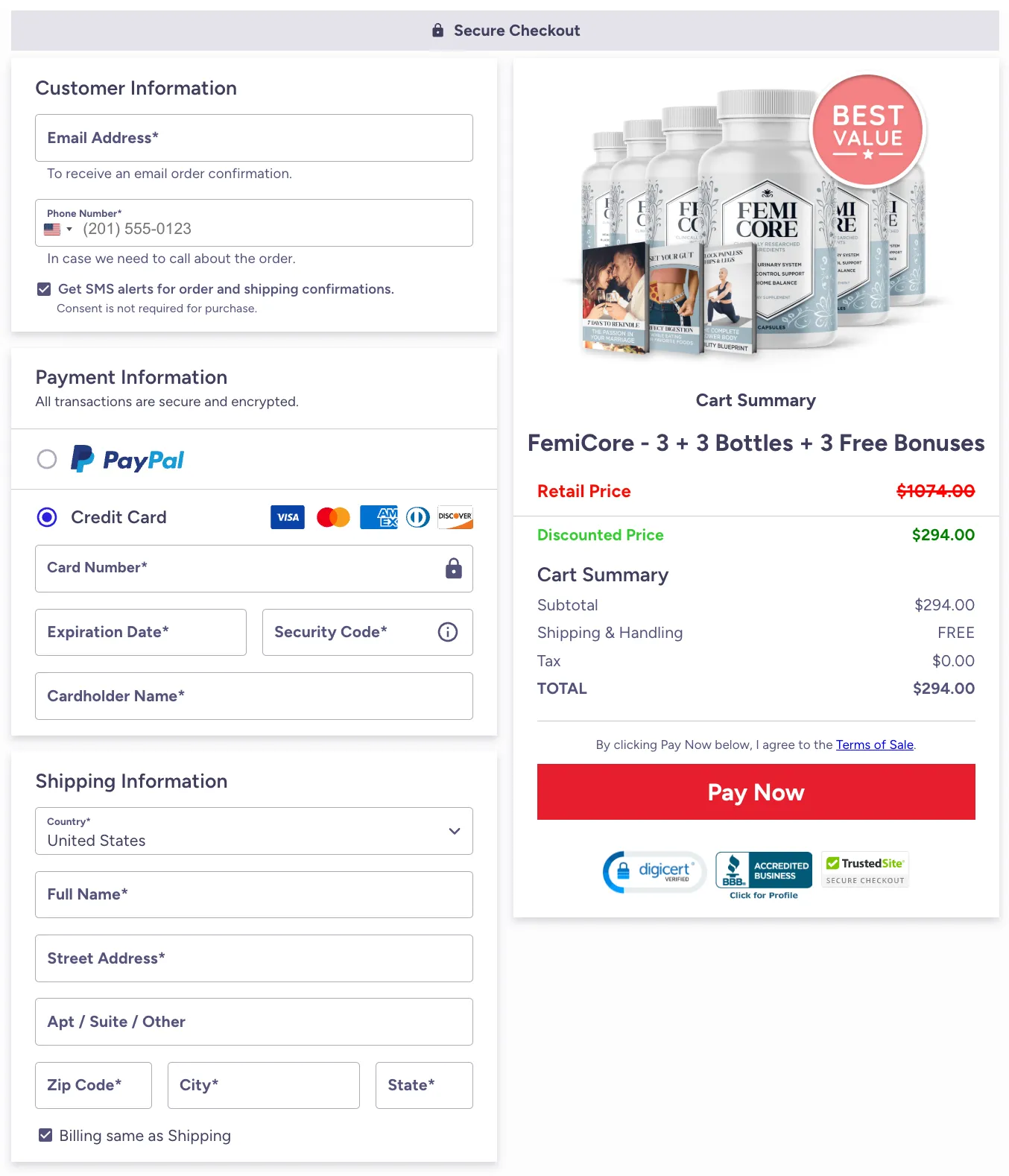
Once you have clicked the FemiCore “Buy Now” button that is right below this text, you will be taken to the secure page. Then just enter your information, and select the desired package to complete your order, and your FemiCore will then be processed and shipped to you.